Five Fiber Laser Cutting Problems and Solutions



Source:razorteklaser Time:2026-05-07
When operating a fiber laser cutting machine—whether you are a novice or an experienced veteran—it is inevitable that you will encounter various issues, both large and small. Therefore, in this article, we have outlined five common fiber laser
cutting problems and their corresponding solutions to help you avoid these pitfalls.
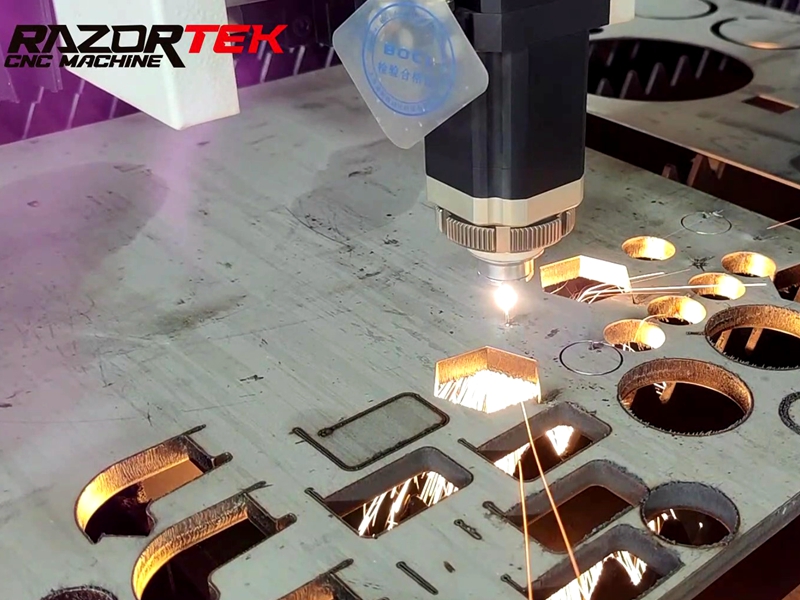
1. Inconsistent Cutting Quality:
Inconsistent cutting quality during laser cutting operations can severely compromise the appearance and dimensional accuracy of the final product. If you encounter this issue, you may notice variations in cutting depth, rough or uneven edges,
and in some instances, the laser failing to fully penetrate the material.
A primary cause of inconsistent cutting quality is the use of laser settings that are unsuitable for the specific material or its thickness. Every material has unique requirements regarding laser power, cutting speed, and focal point. If these
parameters are not precisely calibrated, the laser may fail to cut uniformly across different sections of the material.
Solution: Adjust Laser Power and Cutting Speed for Each Project
Before commencing a project, consult a cutting speed chart and perform test cuts on scrap material to determine the optimal settings for laser power, speed, and focal point. By conducting test cuts, you can ensure that the parameters are
finely tuned for the specific material and thickness required for your project.
Whenever possible—especially for large-scale projects—select materials that exhibit consistent properties across the entire workpiece or across multiple workpieces. This is particularly crucial for materials such as wood, where natural variations
can significantly impact cutting quality.
2. Difficulty Cutting Reflective Materials:
Reflective materials—such as aluminum, copper, and brass—can reflect the laser beam, leading to inefficient cutting processes, potential damage to the laser system, and safety hazards due to the reflection of high-energy light. Reflective
materials can hinder cutting precision and quality, thereby limiting the range of materials you can process with your laser cutter.
Solution: Utilize a Pulsed Laser Mode Designed for Reflective Materials
Employing a pulsed laser mode specifically designed for cutting reflective materials can effectively resolve this issue. Unlike continuous wave (CW) lasers—which emit a constant, steady beam—pulsed lasers emit short, controlled bursts of laser
energy.
The pulsed laser mode reduces the likelihood of the laser beam reflecting back into the laser system. By emitting short, intense pulses, it minimizes the duration of contact between the laser beam and the reflective surface. This lowers the
probability of the laser beam deflecting in a harmful direction, thereby protecting your laser equipment and enhancing cutting quality.
3. Rapid Wear of Cutting Components:
If cutting components wear out too quickly, it will negatively impact the precision and efficiency of the cutting process. This issue stems from the high-intensity nature of laser cutting, wherein components—such as lenses, nozzles, and
mirrors—are subjected to extreme conditions, including high temperatures, debris generated during the cutting process, and continuous laser radiation. Over time, these components will gradually degrade, potentially leading to operational
failure.
Solution: Use High-Quality Consumables and Optimize Cutting Parameters to Reduce Heat
First, invest in high-quality components capable of withstanding the harsh environment of laser cutting. While the initial cost may be higher, in the long run, these components offer greater value by reducing the frequency of replacements and
maintaining optimal cutting performance over an extended period.
Second, cutting parameters should be optimized to minimize wear on the cutting components. You can adjust the laser power, cutting speed, laser focal position, and air or gas pressure to create an efficient configuration best suited for the
specific material being cut. By fine-tuning these parameters, you can minimize the heat-affected zone (HAZ) and reduce the thermal load on both the material and the cutting components.
4. Thermal Damage to Materials:
If you observe charred edges, excessive melting, or deformation of the material being cut, this is likely due to thermal damage. This issue primarily occurs when excessive heat is generated during the cutting process. If the heat level exceeds
the material's melting point, it can result in deformation, charring, and other forms of damage. The root cause of thermal damage is typically the use of a laser power setting that is higher than necessary.
Solution: Reduce Laser Power to the Minimum Level Required for a Clean Cut
The most effective strategy for preventing thermal damage is to calibrate the laser power to the minimum level required to achieve a clean and efficient cut. Here, you must strike a balance regarding temperature levels. If the power is too low,
the material may not be cut completely, or multiple passes may be required. This prolongs the cutting time and increases material waste. Conversely, if the power is too high, it can lead to thermal damage. Therefore, finding the appropriate
laser power setting is crucial.
If you have further questions regarding fiber laser cutting or are interested in fiber laser cutting machines, please feel free to contact our technical support team.