Razortek CNC | What are the functions of fiber laser cutting machine?



Source:razorteklaser Time:2026-06-05
The fiber laser cutting machine is a high-precision, high-efficiency processing system that utilizes a fiber laser generator as its light source and integrates laser technology, CNC technology, and precision mechanical engineering. Characterized
by high precision, high efficiency, and rapid cutting speeds, it is widely used in industries such as mechanical machining, aerospace, shipbuilding, automotive manufacturing, metal mold making, sheet metal processing, and the production of
fitness equipment.
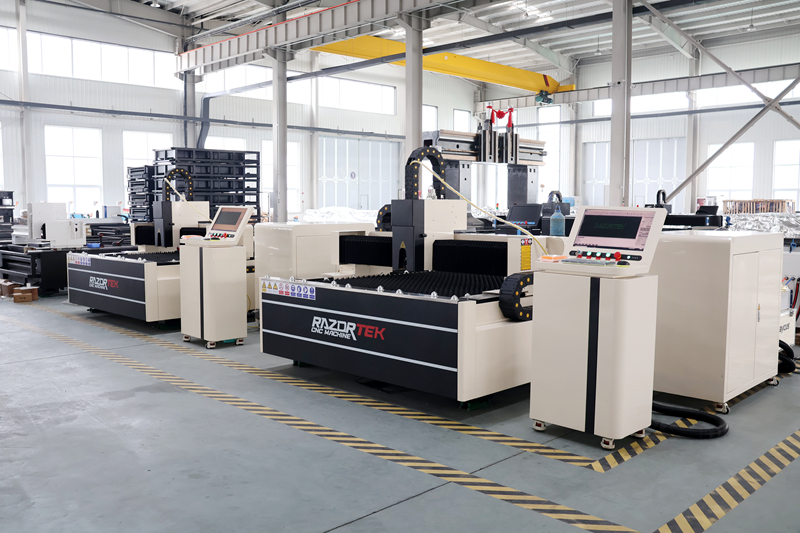
So what is the function of the fiber laser cutting machine?
I. Basic Cutting Capabilities: Comprehensive Material Coverage
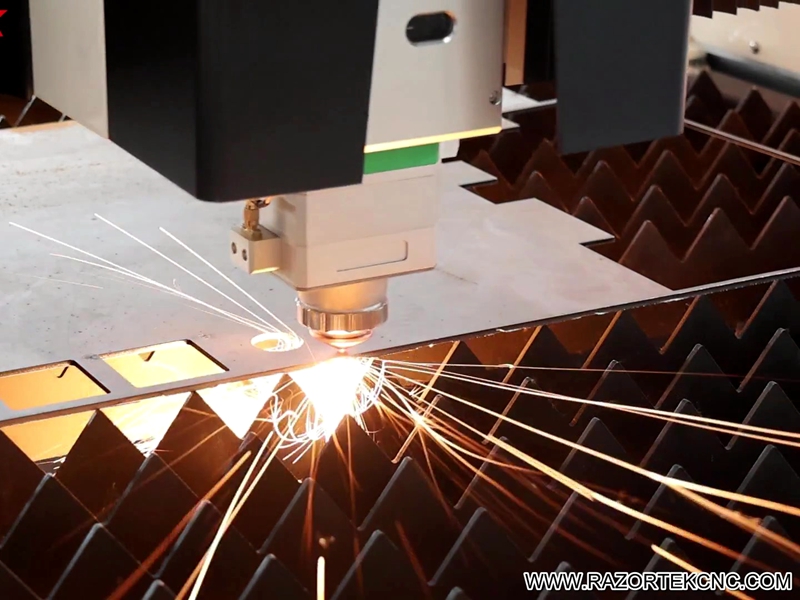
1. Sheet metal cutting is the core function.
Fiber laser cutting machines deliver high-quality cuts on a wide range of metals—including stainless steel, carbon steel, aluminum alloys, brass, copper, and titanium alloys—producing clean, smooth edges that require no secondary processing.
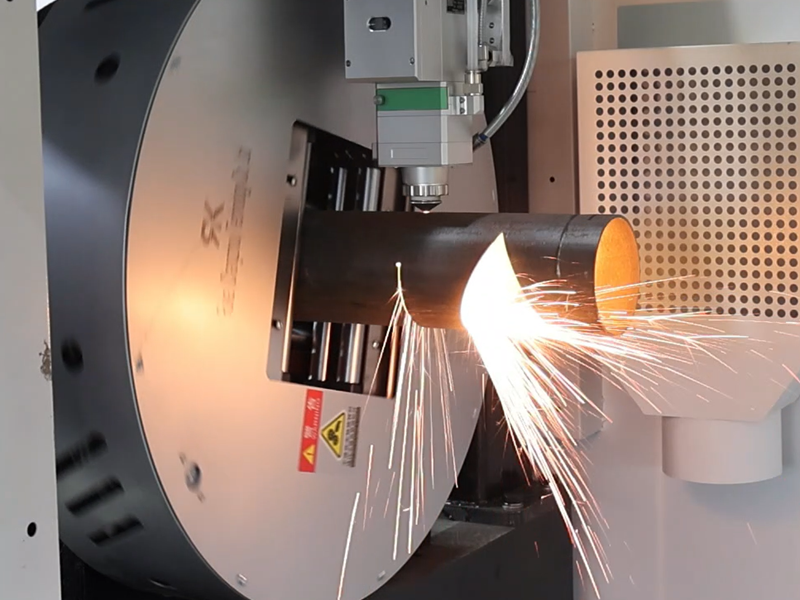
2. Tube cutting is another key function.
Equipped with specialized tube-cutting systems and 3D cutting heads, these machines perform high-speed, high-quality cutting on various profiles, including round, square, rectangular, and elliptical tubes, as well as angle iron, channel steel,
and H-beams.
3. Bevel and angled cutting are important extended capabilities.
Using multi-axis coordinated cutting heads, fiber laser cutting machines can execute one-stop cutting for various bevel types (V, K, X, Y) within a ±45° range. This meets pre-welding beveling requirements and greatly simplifies subsequent
welding operations.
II. Intelligent Features:
Modern fiber laser cutting machines are equipped with advanced intelligent functions that significantly enhance processing quality and efficiency.
1. Intelligent piercing systems optimize the piercing process, offering multiple modes such as "lightning piercing," "seamless piercing," and "nine-stage piercing."
"Lightning piercing" utilizes rapid frequency modulation to drastically improve efficiency on thick plates; "seamless piercing" triggers the laser beam while the head is in motion during thin-sheet processing, substantially shortening cycle times;
and "nine-stage piercing" technology enables the processing of ultra-thick plates, further expanding the machine's capabilities.
2. Automatic focusing and edge-finding functions simplify operation.
The machine automatically adjusts the laser focal position in real-time based on material thickness, eliminating the need for manual refocusing when switching sheets.
3. Intelligent nesting software is a crucial tool for maximizing material utilization.
The system automatically optimizes the layout of parts based on their shape, size, and quantity, making full use of sheet remnants and significantly reducing material waste. Features such as automatic nesting, common-line cutting, and
remnant nesting make the cutting layout more economical and efficient.
4. Intelligent cut-end control and automatic re-cutting ensure cutting quality.
The intelligent cut-end function precisely adjusts parameters at the end of a cut, effectively preventing dross adhesion on inner contours and laser burn marks on outer contours, thereby improving edge smoothness and workpiece integrity.
The automatic re-cutting function uses sensors to intelligently detect whether the cut has fully penetrated the material; if penetration is incomplete, the system automatically retracts and re-cuts the section, ensuring the integrity of every cut.
III. Automated Integration Capabilities:
Fiber laser cutting machines are rapidly evolving toward full automation and intelligence, incorporating a range of integrated functions.
1. CNC systems and software capabilities form the core foundation of automation.
Fiber laser cutting machines are equipped with industrial-grade CNC control systems that support the import of various graphic formats (such as DXF and AI) and offer advanced features like offline programming, cutting simulation, breakpoint
resumption, and power-off memory.
2. Automatic loading/unloading and storage systems enable end-to-end automated material management.
These machines can be equipped with automatic loading/unloading and intelligent storage systems to handle sheet loading, raw material storage, and the unloading and sorting of finished parts, creating an unmanned, fully automated, and
intelligent cutting production line.
3. Auxiliary gas systems and dust extraction systems ensure safety and environmental compliance.
Fiber laser cutting machines support intelligent switching and automatic pressure control for various auxiliary gases; oxygen-assisted cutting enhances performance on carbon steel, while nitrogen is used for protective cutting of materials like
stainless steel. Built-in exhaust ducts and powerful dust extraction systems effectively capture fumes and dust, protecting operator health and safety while reducing the risk of thermal deformation in the machine tool.
The above outlines the capabilities of fiber laser cutting machines. Their core value lies in the deep integration of high-precision laser cutting capabilities with intelligent, automated industrial control systems. With its broad material handling
capabilities, diverse processing methods, and extensive auxiliary processing features—complemented by advanced system functions such as intelligent piercing, automatic focusing, smart nesting, and automated loading and unloading—it has
become indispensable, high-efficiency processing equipment for a wide range of industries, including modern sheet metal fabrication, automotive manufacturing, aerospace, construction machinery, and steel structure production.